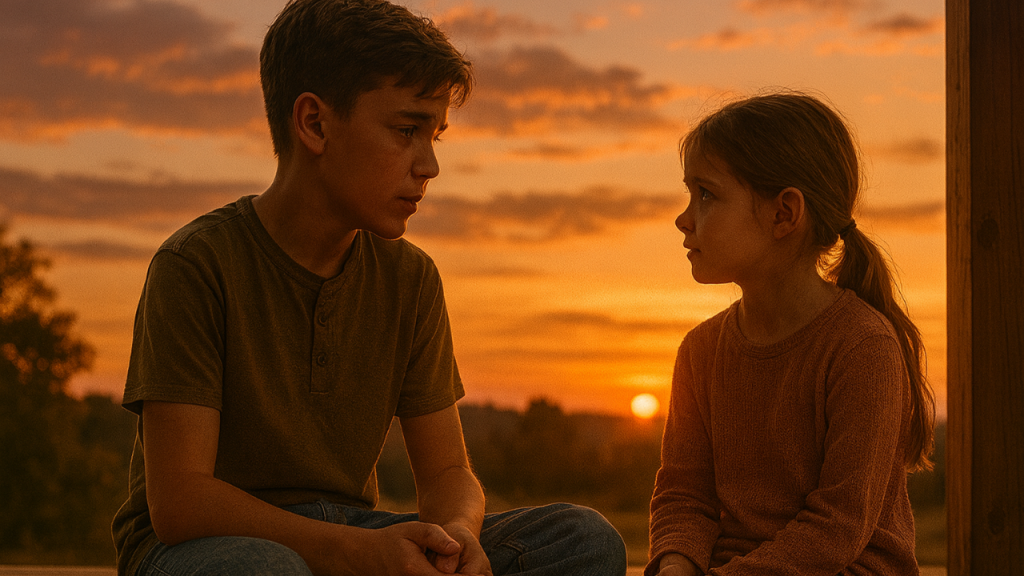

They hadn’t stood this close in years.
At the hospital corridor, the smell of antiseptic hung in the air, sharp and unforgiving. Aarav leaned against the wall, arms crossed, eyes fixed on a crack in the floor tiles. Across from him, his sister Mehul sat stiffly on a plastic chair, fingers knotted together, staring at her phone without seeing it.
Their father lay inside the ICU.
Illness has a way of dragging people back into rooms they’ve avoided.
Aarav and Mehul had once been inseparable. As children, they shared secrets under blankets, defended each other at school, and split mangoes carefully—making sure no one felt cheated. But adulthood rearranged them. Responsibilities collided. Expectations hardened. Words spoken in frustration calcified into distance.
When their mother died five years earlier, grief had pulled them in opposite directions. Aarav stayed, managing the household and finances. Mehul left for another city, chasing independence that felt like survival. Each believed the other had abandoned something essential.
They stopped talking.
Not dramatically.
Quietly.
Birthdays passed with formal messages. Festivals became logistical. Love existed, but it was buried under resentment.
Now, the monitors beeped steadily behind closed doors.
Mehul broke the silence first. “How long has he been like this?”
Aarav didn’t look up. “Since last night.”
“You didn’t call me.”
“I didn’t know if you’d come.”
The words landed between them, heavy and unfinished.
Later, a doctor explained risks and timelines in careful phrases. Decisions needed signatures. Aarav signed automatically. Mehul hesitated, then added her name beside his.
Their hands brushed.
They pulled away too quickly.
During the long night, memories surfaced without permission. Aarav remembered Mehul waiting for him after exams, defending him when he failed. Mehul remembered Aarav selling his bike to pay her college fees.
Neither had ever said thank you.
At dawn, exhaustion softened edges. Mehul handed Aarav a cup of tea.
“You look tired,” she said.
“So do you.”
They shared a quiet smile—the first in years.
“I thought you didn’t care,” Mehul said finally.
Aarav exhaled. “I thought you left because you didn’t want this life.”
They talked then—not to win, but to understand. Grief was named. Fear was admitted. Assumptions unraveled.
When their father woke briefly, he saw them sitting together. His fingers tightened weakly around theirs.
Afterward, outside the hospital, Mehul said, “I don’t want to lose us again.”
Aarav nodded. “Me neither.”
Healing didn’t arrive with apologies alone.
It arrived with effort.
With choosing to call.
With showing up.
Some wounds don’t need to disappear to stop hurting.
They need care.
And sometimes, siblings don’t heal by going back to who they were—
but by learning how to be kinder versions of who they are now.