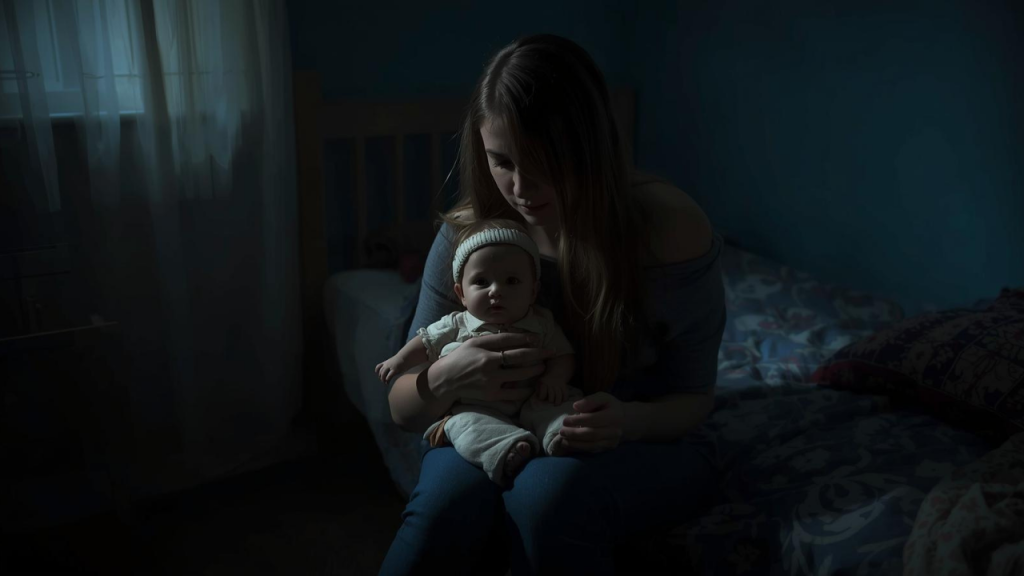

The room still smelled like lavender.
Sunita stood at the doorway, fingers wrapped tightly around the edge of the doorframe, afraid to step inside. The small bed by the window was neatly made, just as it had been the day Aarohi left. Toys sat in their places. Storybooks lined the shelf, bookmarks still tucked between pages as if waiting for a bedtime that would never come.
Eight months had passed.
Eight months since Sunita’s world had split into before and after.
Yet the room remained untouched—frozen in time, like her heart.
Aarohi had been five years old.
Bright. Curious. Full of questions that made Sunita laugh even on her worst days. She loved yellow dresses and mango ice cream and insisted on waving at every stray dog on the street. She believed the moon followed her wherever she went.
Sunita believed that too.
The illness came suddenly. A fever that didn’t go down. A rushed hospital visit. Words like rare and complications whispered between doctors. Sunita remembered holding Aarohi’s hand, promising her everything would be okay.
Promises mothers believe with their whole soul.
Promises that sometimes break.
After the funeral, people filled the house with condolences and advice.
“Be strong.”
“You’re young. You can have another child.”
“God has a plan.”
Sunita nodded politely.
Inside, something screamed.
Aarohi was not replaceable.
Love was not transferable.
And God’s plans felt cruel.
When the visitors stopped coming, silence moved in. Sunita’s husband, Rajesh, returned to work within weeks. He needed routine, he said. Needed distraction.
Sunita stayed home.
Some days she sat by the window for hours, watching shadows move. Some days she replayed memories until they felt like knives. Guilt followed her everywhere.
Why didn’t I notice earlier?
Why didn’t I protect her?
Why am I still breathing when she isn’t?
Grief didn’t look like constant crying.
Some days Sunita felt nothing at all.
She moved through the house mechanically—cooking, cleaning, existing. Nights were the hardest. Sleep brought dreams where Aarohi laughed and ran toward her, only to disappear when Sunita reached out.
She woke up gasping every time.
Rajesh tried to help in the only way he knew—quiet presence, gentle questions, patience. But grief had built a wall between them.
They were mourning the same child in different languages.
One afternoon, Sunita found Aarohi’s school bag while cleaning a cupboard. A small drawing fell out—two stick figures holding hands under a sun with a smiling face.
Mumma and Me, written in uneven letters.
Sunita collapsed onto the floor, sobbing in a way she hadn’t allowed herself to in months.
She clutched the paper to her chest, rocking back and forth like a wounded animal.
“I’m sorry,” she whispered again and again. “I’m so sorry.”
That night, she told Rajesh something she had been hiding.
“I feel like a bad mother,” she said. “A good mother wouldn’t have lost her child.”
Rajesh held her tightly. “A bad mother wouldn’t hurt like this.”
For the first time, Sunita let herself be held.
Healing did not arrive as acceptance.
It arrived as permission.
Permission to grieve without timelines.
Permission to say her child’s name.
Permission to admit that life would never be the same.
Sunita began therapy reluctantly. Talking about Aarohi felt like tearing open a wound. But the therapist said something that stayed with her.
“Love doesn’t end when a life does. Grief is love with nowhere to go.”
Sunita cried quietly at that.
Weeks later, Sunita visited a park she had avoided since Aarohi’s death. Children ran past her, laughing loudly. Every sound felt sharp. She almost turned back.
Then she saw a little girl struggling to tie her shoelaces, frustration on her face.
Without thinking, Sunita knelt down and helped her.
“There,” she said softly. “All done.”
The girl smiled brightly. “Thank you, aunty!”
As the child ran off, Sunita’s chest tightened—not with pain, but with something gentler.
Love didn’t vanish.
It changed shape.
Sunita started volunteering at a children’s hospital once a week. She didn’t tell anyone at first—not even Rajesh. Sitting beside sick children, reading stories, holding small hands—it hurt.
But it also healed.
She didn’t replace Aarohi.
She honored her.
At home, Sunita finally entered Aarohi’s room again. She sat on the bed, holding her daughter’s favorite stuffed toy, and spoke out loud.
“I miss you,” she said. “Every day.”
The room didn’t answer.
But Sunita felt heard.
Grief still came unexpectedly.
In the grocery store.
At birthdays.
When she saw yellow dresses.
But it no longer crushed her completely.
One evening, Sunita lit a small lamp beneath Aarohi’s photograph. Rajesh stood beside her.
“She made us parents,” Sunita said quietly. “That never goes away.”
Rajesh nodded. “Neither does she.”
They stood together, not healed—but whole enough to keep going.
Sunita learned that grief doesn’t mean moving on.
It means moving with the love that remains.
Some days she smiled. Some days she cried. Both were allowed.
Aarohi was gone.
But she was also everywhere—in kindness, in memory, in the quiet strength Sunita didn’t know she possessed.
And as Sunita stepped into each new day, carrying both pain and love, she understood something deeply true:
A mother never stops grieving her child.
But she can learn to live again—
not because the loss is small,
but because the love is endless.