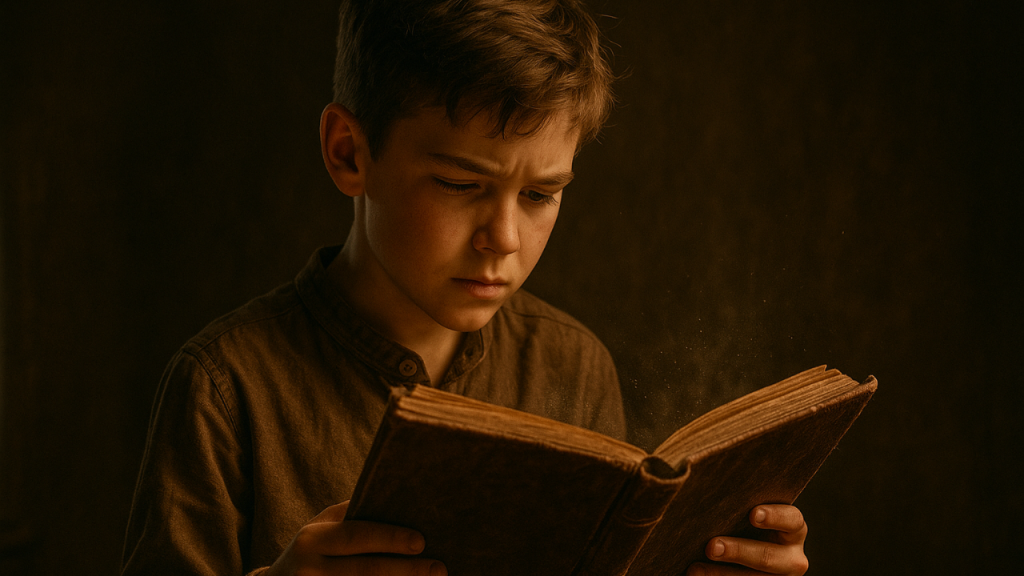

The question followed Aditya everywhere.
It waited in classrooms when teachers asked for parents’ signatures. It hovered at family gatherings when relatives lowered their voices. It appeared in mirrors when he tried to understand his own reflection.
“Where is your father?”
Aditya learned early to answer with a shrug. “He left.”
It was a sentence polished smooth by repetition. It required no details. It discouraged curiosity. And it allowed Aditya to move on without appearing wounded.
He grew up with his mother, Nandini, in a small rented flat near the railway tracks. Trains passed often, loud and impatient, as if reminding him that some people always left. Nandini worked two jobs and carried her exhaustion quietly. She never spoke ill of his father. She rarely spoke of him at all.
At night, when Aditya was young, she told him stories—about courage, about honesty, about men who kept their word. He wondered if she was describing the man who had gone missing from his life.
As he grew older, anger replaced curiosity.
He resented the empty seat at school events. He resented classmates who complained about their fathers’ strictness. He resented the way people assumed something was wrong with him, as if absence were contagious.
“Did he abandon you?” someone asked once.
Aditya laughed too quickly. “Good riddance.”
But anger is heavy.
It slows you down.
In college, Aditya avoided commitments. He trusted cautiously, loved reluctantly. He told himself independence was strength. He told himself he didn’t need answers.
Then his mother fell ill.
Nothing dramatic—at first. Fatigue. Shortness of breath. Missed steps. The diagnosis arrived quietly but landed hard: a heart condition that required long-term treatment.
One evening, as Aditya organized medical files, a small envelope slipped from between reports. It was old, creased, addressed to him in handwriting he didn’t recognize.
“What’s this?” he asked.
Nandini froze.
For a long moment, she said nothing. Then she sat down heavily, as if the truth required a place to rest.
“I should have told you sooner,” she said. “I just didn’t know how.”
The letter was from his father.
Not a goodbye.
An explanation.
His father, Ramesh, had been diagnosed with bipolar disorder shortly after Aditya’s birth. Episodes came unpredictably—periods of intense energy followed by crushing lows. When a manic phase led to a financial disaster that nearly destroyed the family, Ramesh made a decision he believed was protective.
He left.
Not because he didn’t love his son.
Because he feared hurting him.
Nandini spoke softly, carefully. Of hospital visits. Of treatment that didn’t work at first. Of letters Ramesh wrote but never sent. Of a man who watched his son grow up from a distance, believing absence was the lesser damage.
Aditya’s hands shook.
The story he had built—of abandonment, of rejection—tilted and cracked.
“Where is he now?” Aditya asked.
Nandini hesitated. “In a care facility. He asked about you. Often.”
The visit took place on a quiet afternoon.
Ramesh was thinner than Aditya imagined. Older. His eyes, however, were unmistakably familiar.
They sat across from each other in a small garden.
“I’m sorry,” Ramesh said simply. “I should have found a better way.”
Aditya wanted to shout. To demand years back. To ask why love had to look like disappearance.
Instead, he asked, “Did you ever want to come back?”
“Every day,” Ramesh replied. “I just didn’t want to bring chaos with me.”
Forgiveness did not arrive instantly.
But understanding did.
Aditya left that day lighter than he arrived. Not healed—but unburdened of a lie he had carried alone.
At home, he hugged his mother longer than usual.
The truth did not change the past.
It changed how he carried it.
Some absences are not emptiness.
They are quiet acts of flawed love.
And sometimes, knowing that truth is enough to begin again.