

The cane felt heavier than it should have.
Not because of its weight, but because of what it announced. Rohan stood at the edge of the footpath, fingers wrapped around the handle, listening to the traffic surge and recede like an uncooperative tide. He had crossed this road a thousand times before. Today, it felt unfamiliar, widened by fear.
“Wait,” a voice said gently.
Rohan froze. He hated that word now—wait. It implied dependence, delay, deficiency. He nodded anyway, heart beating faster than the engines around him. When the signal changed, he stepped forward, counting under his breath, trusting the rhythm he was still learning.
Six months earlier, Rohan had been a photographer who chased light.
He remembered that life in fragments—the hum of a wedding hall, the click of the shutter at sunrise, the way people relaxed when they felt seen. He remembered the accident too: a speeding bike, a scream of brakes, a blur that never resolved. The doctors used careful language.
Partial vision loss.
Permanent.
Rohan listened without interrupting, the way he’d learned to do when news arrived that didn’t ask for agreement. In the hospital, visitors spoke of recovery and miracles. Rohan learned to smile and conserve energy for later—when the room emptied and the dark felt closer.
Home changed.
Furniture became obstacles. Light became unreliable. Familiar faces lost edges. The camera lay untouched in its bag, accusation heavy in its silence. Rohan stopped answering calls. He avoided mirrors. He measured days by what he couldn’t do.
Anger helped for a while.
Then it didn’t.
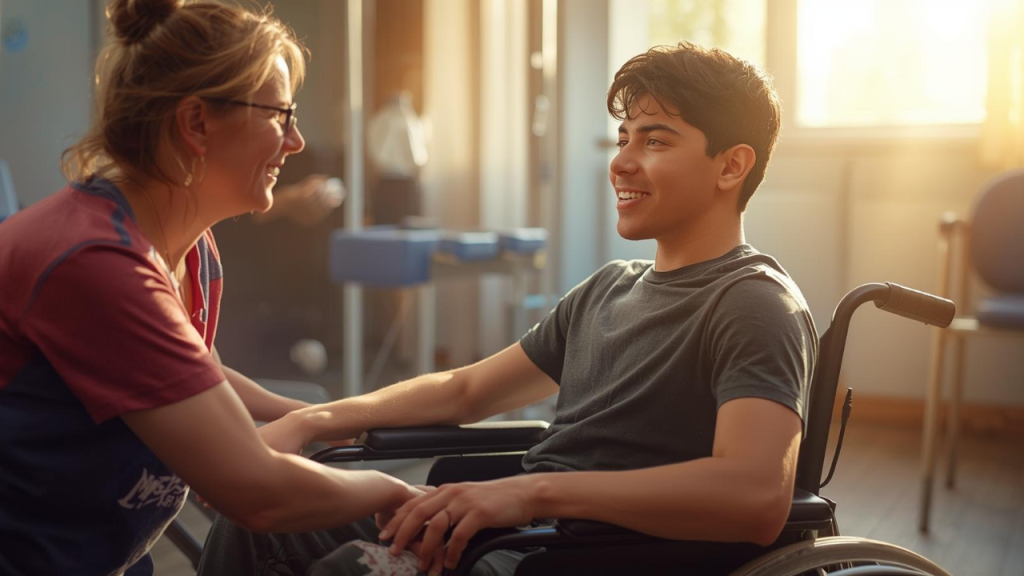
Rehabilitation began with small humiliations: learning to pour water without spilling, to navigate stairs without rushing, to ask for help without apology. The instructor, Asha, spoke plainly and waited patiently.
“You don’t need to like this,” she said. “You need to learn it.”
Rohan learned.
He learned to map rooms with his feet, to trust sound, to accept that speed would return later—if at all. He learned that fatigue was information, not failure. He learned to stop punishing himself for needing rest.
The hardest lesson came when Asha asked about photography.
“I can’t,” Rohan said quickly.
Asha didn’t argue. She handed him a small audio recorder instead. “Describe what you notice,” she said.
Rohan resisted. Then he tried.
He described the scrape of chairs on tile, the laughter that arrived before faces, the way a voice carried warmth or distance. He noticed textures—wind on skin, heat on concrete, rain’s uneven rhythm. He noticed meaning where sight used to dominate.
Weeks later, he picked up the camera again.
He adjusted settings by touch, framed differently, worked slower. He photographed hands, shadows, movement. The images were not what he used to make.
They were honest.
When he shared a few online, responses arrived cautiously, then confidently.
“These feel intimate,” someone wrote.
“I’ve never noticed sound in a photograph before,” said another.
Rohan cried—not from grief this time, but relief.
Living with disability did not mean surrendering his identity.
It meant renegotiating it.
There were bad days. Days he misjudged steps. Days the cane felt like a label instead of a tool. On those days, he allowed himself frustration without letting it decide his future.
On good days, he crossed roads with steadier timing. He worked short assignments. He laughed easily. He rested when needed.
At an exhibition months later, Rohan stood beside his work, listening to people talk about what they felt.
“You taught me to look differently,” someone said.
Rohan smiled.
He hadn’t lost his way of seeing.
He had found another.
Learning to live with a disability, he realized, is not about becoming less.
It’s about becoming fluent in a different strength.


