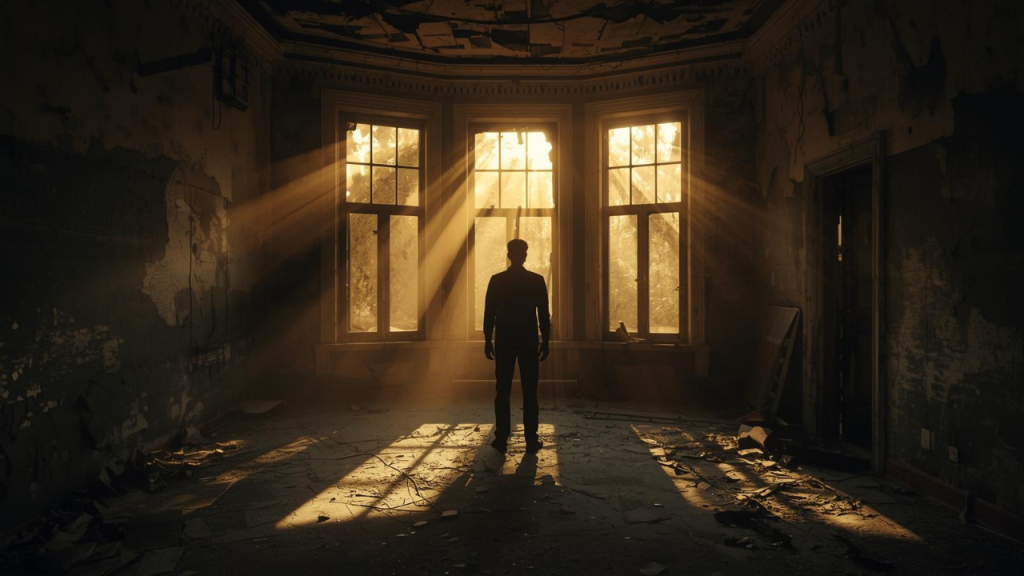

The house stood exactly where Raghav had left it—at the end of a narrow lane, paint peeling, windows dark like unblinking eyes. He had avoided this street for twenty years, taking longer routes, pretending the city had erased it. But grief has a way of circling back, and the phone call he received that morning left him no choice.
His mother had passed away quietly in her sleep.
Raghav parked his car a few houses away, heart pounding harder than it had during any boardroom negotiation or courtroom argument. He was a successful man now—tailored suit, polished shoes, confidence practiced to perfection. Yet standing before his childhood home, he felt like the frightened boy he once was.
Growing up, this house had been filled with tension. His father’s temper ruled the rooms, sharp words cutting deeper than any slap. Silence had been Raghav’s survival strategy. He learned early that feelings were liabilities. When his father died suddenly, relief mixed with guilt, and Raghav left home as soon as he could, carrying anger he never unpacked.
Inside, the air smelled of dust and memories. His mother’s belongings lay neatly arranged, as if she had been preparing for his return. On the wall hung an old photograph—Raghav at ten, standing stiffly beside his parents, eyes wary.
He sat on the edge of the bed where his mother had spent her last years and felt something crack open. Regret arrived—not loud, but heavy. He had called less each year, convincing himself distance was protection. Now there were no more calls to postpone.
A neighbor knocked softly, offering condolences. “She waited for you,” she said kindly. “Every evening.”
The words cut deeper than blame.
That night, Raghav opened a box his mother had labeled with his name. Inside were school certificates, old drawings, and a letter written in her careful handwriting. She wrote of love she struggled to show, of fear that kept her silent, of hope that one day he would forgive—not just her, but himself.
Tears blurred the page. For the first time, Raghav allowed himself to feel the grief he had buried beneath ambition.
In the days that followed, he spoke with neighbors, listened to stories of a woman who defended her son quietly, who was proud of him from afar. The image of his past softened. It became more complex, more human.
Before leaving, Raghav stood in the doorway one last time. He realized confronting the past did not mean reliving it—it meant understanding it.
When he returned to his life, something had shifted. He apologized where he once deflected. He listened where he once controlled. The armor he wore began to loosen.
Healing, Raghav learned, begins not by forgetting who you were—but by finally facing them with compassion.