
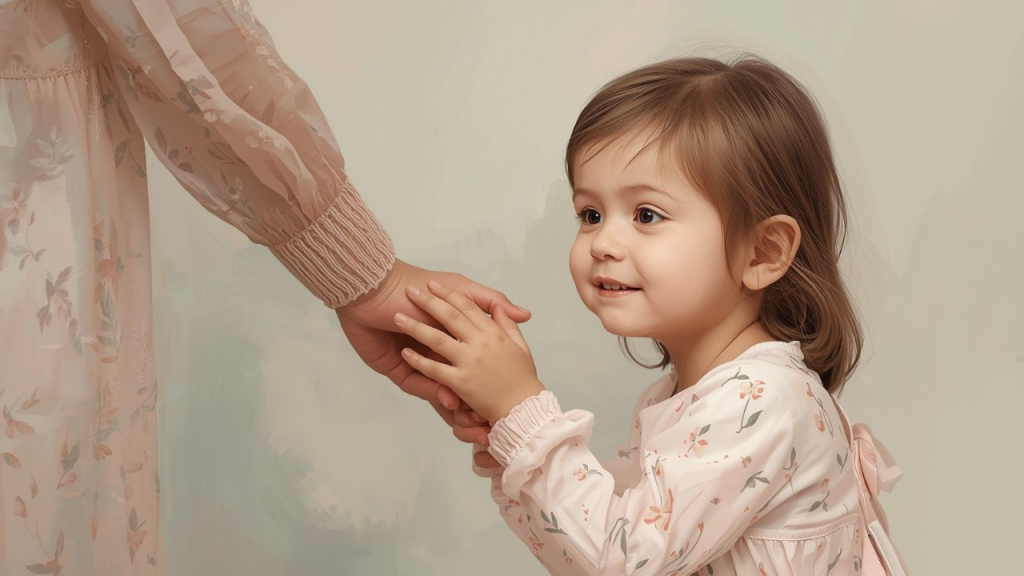

The boy’s name was written in pencil.
Not because it was temporary, but because nothing about his life had ever felt permanent enough for ink.
Ayaan sat on the small plastic chair outside the social worker’s office, feet dangling above the floor, hands folded carefully in his lap. He had learned how to sit like this—quiet, polite, invisible. At seven years old, he already knew the rules of places where adults decided your future.
Don’t ask questions.
Don’t expect promises to last.
Most of all, don’t get attached.
The orphanage had been clean but crowded. Beds lined up like punctuation marks. Smells of disinfectant and boiled rice. Caretakers did their best, but love there was shared carefully, rationed like sugar.
Ayaan had arrived at four, holding nothing but a torn backpack and a memory of a woman’s voice singing softly. He could no longer remember her face clearly—only the warmth.
Families had come before.
Some smiled too brightly. Some asked questions that made him feel like a problem to be solved. A few took other children home. Ayaan learned how to smile without hoping.
That morning, the social worker knelt in front of him.
“Ayaan,” she said gently, “there’s a couple who would like to meet you.”
Ayaan nodded.
He followed her into a sunlit room where two people stood awkwardly near the window. They looked ordinary. No dramatic expressions. No forced cheer.
The woman smiled first—not wide, not practiced. Just warm.
“Hi,” she said. “I’m Meera.”
The man waved slightly. “I’m Raghav.”
They didn’t crouch to his level. They didn’t ask him to perform. They simply waited.
Ayaan studied them carefully.
He noticed how Meera’s hands were steady. How Raghav looked at her before speaking, as if checking something silently. He noticed the space they gave him.
That felt new.
They talked about simple things—his favorite food, whether he liked drawing, what animals he thought were brave. No one asked why he was quiet.
When the meeting ended, Meera said, “We’d like to see you again, if that’s okay.”
If.
The word mattered.
The visits continued. Walks in the park. Shared snacks. Silence that didn’t feel awkward. One day, Raghav taught Ayaan how to ride a bicycle. When he fell, no one yelled. Meera cleaned his scraped knee and kissed it without hesitation.
Something inside Ayaan trembled.
Care like this was dangerous.
It made you want things.
The night before the final decision, Ayaan couldn’t sleep. He sat on his bed, clutching the edge of his blanket.
“What if they change their mind?” he whispered to the dark.
No one answered.
The adoption day was quiet.
Paperwork. Signatures. Gentle smiles. When it was done, the social worker said, “You can go home now.”
Home.
The word felt unfamiliar.
In the car, Meera handed him a small bag. Inside was a notebook.
“It’s yours,” she said. “You can write anything. Or nothing.”
At the apartment, Ayaan saw a room painted soft blue. A bed with a quilt stitched by hand. A shelf waiting to be filled.
“This is your room,” Raghav said. “We can change anything you want.”
Ayaan nodded, throat tight.
The first weeks were hard.
He hid food under his pillow. He flinched at raised voices—even laughter. He apologized constantly. He waited for anger that didn’t come.
At night, he wet the bed and cried in shame.
Meera sat beside him, calm. “Accidents happen,” she said. “You’re safe.”
Safe.
The word slowly began to mean something.
Trust arrived in pieces.
When they kept promises.
When they came back every time.
When love did not disappear after mistakes.
One evening, while drawing in his notebook, Ayaan looked up suddenly.
“Mumma?” he asked, uncertain.
Meera froze.
“Yes?” she replied softly.
Ayaan smiled.
Later that night, Raghav found Meera crying quietly.
“He called me Mumma,” she whispered.
“He chose you,” Raghav said.
Years later, at a school event, Ayaan stood on stage confidently, scanning the audience until he found them—Meera waving, Raghav clapping too loudly.
He waved back.
Adoption had not erased his past.
It had given him a future.
Some children are not born into love.
They are found by it.


